How the 1944 Chicago Convention and the Nine Freedoms of the Air Impact Airline Pricing Strategies
Setting the Stage: Why Old Agreements Still Matter Today
Every airline revenue manager thinks in terms of yields, load factors, and competitive pricing. But behind the numbers lies a framework set more than 80 years ago: the 1944 Chicago Convention. This agreement didn’t just create the International Civil Aviation Organization (ICAO)—it also codified the “Freedoms of the Air,” which shaped how airlines access markets and price their seats.
On the surface, these freedoms might seem like dry legal rights, but they form the skeleton of global airline economics. How airlines can fly between, over, and within nations directly affects their competitive landscape—and in turn, the pricing levers you pull every day.
The Chicago Convention in Brief
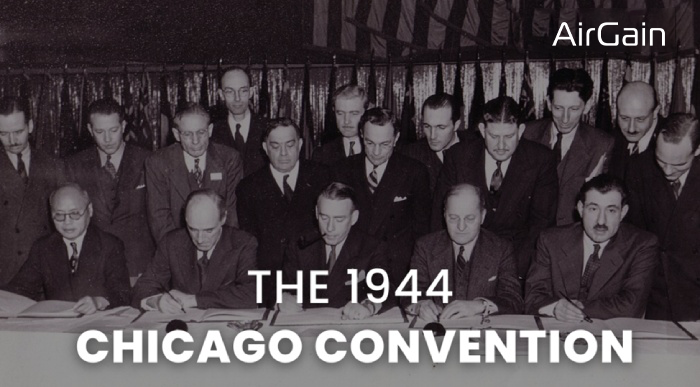
In December 1944, 52 nations met in Chicago to establish rules for international civil aviation. At its core, the convention aimed to balance national sovereignty with the desire for global air connectivity. The result was a treaty that’s still the backbone of international aviation law today.
The “Freedoms of the Air” were not all formally ratified in the Convention itself—only the first two were guaranteed—but over time, they became an accepted framework negotiated in bilateral or multilateral air service agreements. And that’s where revenue management enters the picture: every freedom opened—or restricted—a set of pricing opportunities.
The Nine Freedoms of the Air (and Why They Matter for Pricing)
Let’s break down the freedoms with an eye toward how they influence revenue strategy:
First Freedom: The right to overfly another country without landing. Pricing effect: Minimal direct impact, but crucial for route efficiency. The ability to avoid detours reduces operating costs, giving airlines more room in their fare structures.
Second Freedom: The right to land in another country for technical reasons (refueling, maintenance) without boarding passengers. Pricing effect: Historically important for long-haul flights before ultra-long-range aircraft. Today, less relevant, though it once affected cost structures for pricing transcontinental fares.
Third Freedom: The right to carry passengers from your home country to another. Pricing effect: The foundation of international airline business. Ticket pricing hinges on demand elasticity in foreign markets and competition with local carriers.
Fourth Freedom: The right to carry passengers from another country back to your own. Pricing effect: Creates the “roundtrip” pricing dynamic. Airlines can bundle outbound and inbound legs, impacting yield management strategies and advance purchase rules.
Fifth Freedom: The right to carry passengers between two foreign countries as long as the flight originates or terminates in your own country. Pricing effect: Game changer. Think Emirates flying New York–Milan, or Singapore Airlines operating Frankfurt–New York. Fifth freedom flights introduce competition on routes otherwise served by local carriers, often leading to aggressive pricing wars. For revenue managers, it forces sharper competitive benchmarking.
Sixth Freedom: The right to carry passengers between two foreign countries via your own country. Pricing effect: The basis of hub-and-spoke strategies. For example, Qatar Airways pricing Bangkok–London via Doha. This allows hub carriers to compete on one-stop fares often at a discount to nonstop operators. RM teams must constantly balance local O&D fares with connecting traffic without cannibalizing yield.
Seventh Freedom: The right to carry passengers between two foreign countries without touching your own country. Pricing effect: Rare, but when granted, it opens new revenue streams. Low-cost long-haul operators in Europe have used this to undercut traditional players with point-to-point pricing.
Eighth Freedom (Cabotage): The right to carry passengers within a foreign country on a flight that continues to/from your own. Pricing effect: Highly restricted due to sovereignty concerns. Where allowed (like within the EU), it creates a true single market for pricing. Carriers can apply domestic fare logic across borders, intensifying competition.
Ninth Freedom: The right to operate standalone domestic flights within a foreign country. Pricing effect: Almost never granted outside of blocs like the EU. But where it exists, it fundamentally changes competition and pricing, since foreign carriers can match locals on domestic routes.
Why Revenue Managers Should Care
So why does this matter in daily pricing decisions? Here’s the crux: freedoms define the competitive set.
Fifth and Sixth Freedoms create “unexpected competitors.” A Middle Eastern carrier pricing aggressively on Europe–Asia flows can force European and Asian airlines to rethink fare fences.
Seventh to Ninth Freedoms (where allowed) blur the line between domestic and international markets, meaning your yield strategy must account for foreign carriers tapping into what was once a protected pool.
Even First and Second Freedoms impact cost structures indirectly, changing the floor price airlines need to cover operating expenses.
In short, your pricing power is shaped not just by demand and supply, but by the legal rights carriers hold on a given route.
Examples in Practice
Emirates on New York–Milan (Fifth Freedom): Local Italian carriers face pricing pressure as Emirates brings widebody capacity and premium service, often at competitive fares. Revenue managers in Europe must discount selectively or emphasize loyalty perks to retain share.
Singapore Airlines on Frankfurt–New York: Demonstrates how Asian carriers can capture transatlantic premium demand. Pricing strategies must shift from purely Europe–US dynamics to include Asian hub competitors.
Norwegian (Seventh Freedom in Europe): By exploiting open skies, they offered ultra-low long-haul transatlantic fares, forcing legacy carriers to respond with basic economy products.
Strategic Implications for Pricing Teams
Here’s what revenue managers should take away:
Map your competitive set through freedoms. Don’t just benchmark local players—consider who has Fifth or Sixth Freedom rights on your routes.
Use freedom-driven cost advantages. If your airline has connecting opportunities (Sixth Freedom), you can flex pricing power in thin markets by undercutting nonstop operators.
Think beyond borders. In open markets like the EU, domestic-style dynamic pricing applies even internationally, raising the stakes for algorithm-driven revenue management.
Looking Ahead: Liberalization and Its Pricing Ripple
The future of freedom is one of gradual liberalization. Open Skies agreements—like between the US and EU—expand the applicability of these freedoms and, by extension, increase competition. For revenue managers, this means constant vigilance: what was once a closed, high-yield market can suddenly become a battlefield.
The Chicago Convention may be 80 years old, but its legacy is alive in every fare bucket you file. Understanding how the freedom shapes your competitor set isn’t academic—it’s central to winning the pricing game.